


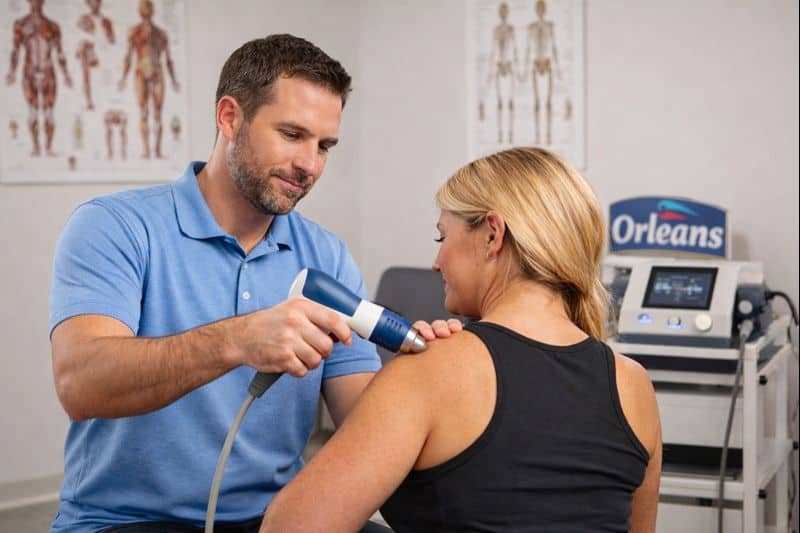
Shockwave Therapy in Orleans: What It Is and Who It Can Help
If you’ve been dealing with pain that just doesn’t seem to resolve, even after rest, exercises, or hands-on treatment, you’re not alone. Many musculoskeletal injuries heal well with time and the right care. Others linger, flare up repeatedly, and begin to affect daily life, work, and activity. That’s why we’ve added shockwave therapy at our Orleans physiotherapy clinic. Shockwave therapy is not a quick fix and it’s not appropriate for every injury, but when used for the right condition, it can be a very effective tool for helping stubborn pain settle and allowing normal movement to return.
What is shockwave therapy?
Shockwave therapy uses focused acoustic sound waves that are delivered to injured or painful tissue. These sound waves carry mechanical energy into the area, stimulating a biological response in the tissue.
Despite the name, there is no electrical shock involved. The treatment feels like a series of rapid pulses against the skin. The intensity is adjusted throughout the session to stay within a tolerable range, and treatment is guided by a physiotherapist trained in its use.
Shockwave therapy has been used in medicine for decades and is now widely applied in physiotherapy for chronic tendon, muscle, and joint-related conditions that are slow to heal on their own.
How does shockwave therapy help with pain?
Many long-standing pain conditions share a similar issue: the tissue is no longer progressing through a normal healing process. Blood flow may be reduced, the tissue becomes sensitive, and loading the area can trigger ongoing pain.
Shockwave therapy helps by:
-
Increasing local blood flow
-
Stimulating tissue repair and regeneration
-
Reducing pain sensitivity over time
-
Helping address calcified or poorly organized tissue in some conditions
Rather than masking symptoms, shockwave therapy encourages the body to restart its own healing response. For this reason, it is most effective when combined with physiotherapy exercises and progressive loading, not used as a standalone treatment.
Conditions that often respond well to shockwave therapy
At our Orleans physiotherapy clinic, shockwave therapy is most commonly used for chronic or persistent conditions, particularly those involving tendons.
These may include:
-
Plantar fasciitis and chronic heel pain
-
Achilles tendinopathy
-
Patellar tendon pain (jumper’s knee)
-
Lateral elbow pain (tennis elbow)
-
Medial elbow pain (golfer’s elbow)
-
Rotator cuff–related shoulder pain
-
Calcific shoulder tendinopathy
-
Chronic hamstring or gluteal tendon pain
These conditions often improve slowly or plateau with rest alone, making them good candidates for shockwave therapy when guided by a physiotherapist.
Who is shockwave therapy in Orleans best suited for?
Shockwave therapy in Orleans tends to be most helpful for people who:
-
Have had pain for several months or longer
-
Have tried other conservative treatments without lasting improvement
-
Want to stay active while addressing the underlying issue
-
Are willing to combine treatment with a structured physiotherapy plan
It is not usually the first step in care. Early or acute injuries often respond well to education, movement guidance, and exercise alone. Shockwave therapy is typically introduced when progress has stalled or when tissue healing needs an additional stimulus.
What does a shockwave therapy session feel like?
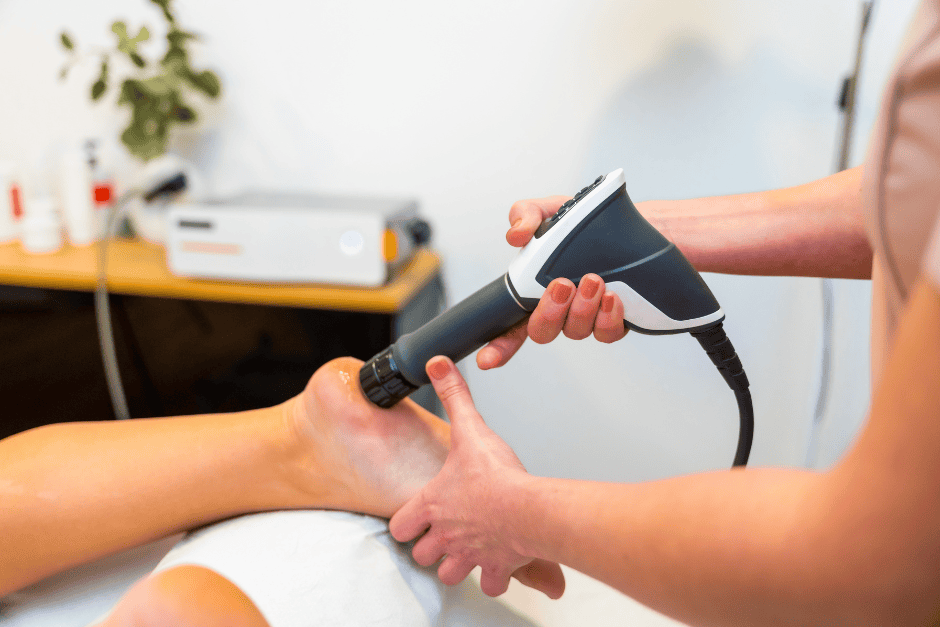
Shockwave therapy is performed during a regular physiotherapy appointment. A gel is applied to the skin, and a handheld device delivers targeted pulses to the affected area.
Most people describe the sensation as uncomfortable but manageable. The intensity can be adjusted at any time, and communication with your physiotherapist is encouraged throughout the session.
After treatment, it’s normal to experience mild soreness or tenderness in the area for a day or two, similar to how tissue might feel after a challenging workout.
How many sessions are usually needed?
Shockwave therapy is typically delivered as a short series of treatments rather than a single session. Many people begin to notice improvement after two or three sessions, with continued progress over several weeks.
Your physiotherapist will help determine:
-
Whether shockwave therapy is appropriate for your condition
-
How many sessions are recommended
-
How it fits into your overall rehabilitation plan
Is shockwave therapy safe?
When delivered by a trained physiotherapist and used for appropriate conditions, shockwave therapy is considered safe. It is not recommended for everyone, and certain medical conditions or treatment areas may not be suitable.
This is why a thorough physiotherapy assessment is always the first step before starting shockwave therapy at our Orleans clinic.
Why we offer shockwave therapy at our Orleans clinic
We introduced shockwave therapy in Orleans to expand our ability to help clients dealing with persistent pain. It doesn’t replace physiotherapy. It supports it.
By combining shockwave therapy with hands-on care, exercise prescription, and education, we’re able to better match the right treatment to the right person at the right time.
Wondering if shockwave therapy in Orleans is right for you?
If you’re in Orleans and dealing with ongoing pain that hasn’t responded to other treatments, a physiotherapy assessment is the best place to start. Your physiotherapist can determine whether shockwave therapy makes sense for your condition and guide you through a plan tailored to your goals. Click here to complete a form to get the process started.

Latest posts by Jason Bellefleur (see all)
- Microtears: The “Good” Pain vs. The “Bad” Pain (And How to Recover in Rockland) - February 3, 2026
- Shockwave Therapy in Orleans: What It Is and Who It Can Help - January 16, 2026
- “Backhanded” by Elbow Pain: A Complete Guide to Tennis Elbow - January 15, 2026